Chinlone is the traditional sport of Myanmar and it is unlike any other game in the world. It is a combination of sport, art and dance — a team sport with no opposing team. The focus is not on winning but on how beautifully the game is played. As a team sport, chinlone is radical — there is no conflict, only collaboration. Yet it demands as much focus and fierce effort as the most competitive ball games.
Chinlone
The Game
How It's Played
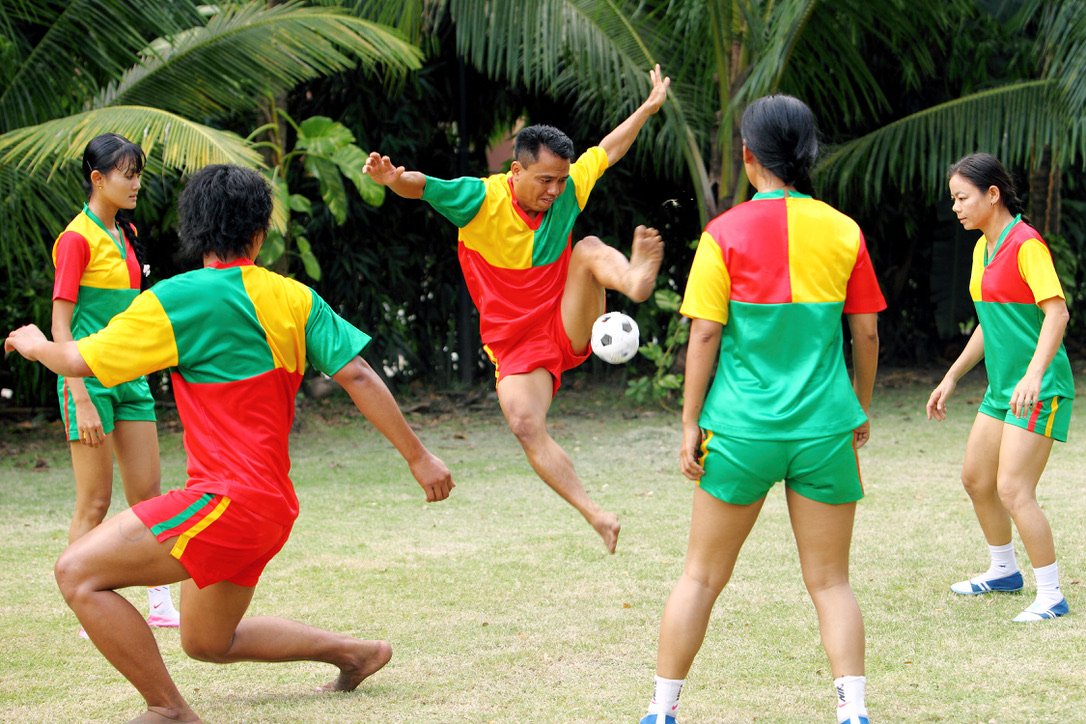
Chinlone is ideally played by a team of six. A hand-woven rattan ball is kept up in the air using only the feet and knees, passed back and forth between the players. Like any team ball sport, circle play involves all the random ball movement and potential chaos that comes with six players in motion — the difference is that everyone is working together rather than against each other.
One of the most distinctive things about chinlone is that men and women can play together on the same teams at the highest levels of the game. Children and elders often play on the same teams. This mixing of genders and age levels is almost unknown in competitive sport and is one of the things that makes chinlone genuinely unique.
The game begins with a hand toss of the ball to a player across the circle, who receives it using one of the traditional kicks and passes it to another player. The whole team begins walking in a counter-clockwise direction around the outside of the circle, this continues as long as the ball is in play. At some point as the ball is being passed back and forth, one player steps into the center and becomes the soloist — known as the Prince or Princess. The soloist is free to create their own solo according to their style and skill, stringing moves together for as long as the ball stays up. The other five players become supporters. If the soloist passes the ball to a supporter, or loses the ball and a supporter saves it before it touches the ground, the supporter tries to return it with a single touch so the soloist can continue. When the ball touches the ground it is dead, the soloist comes out of the center and the play begins again. The play goes on like this with all players taking turns to solo.
Circle play is deceptively fast and extremely difficult to play well. There is an etiquette inside the circle — unspoken but understood — that helps players give each other enough space to spin and move without collision. Intuitive communication is essential. A player must be deeply tuned in to the other players and to the flow of the ball at all times. Most players specialize in either supporting or soloing, though all players do both.
Everyday Play and Festival Play
Chinlone is played in two very different contexts and the feeling of each is quite distinct. Everyday circle play is casual with a focus on improvisation and collective fun. There is no formal circle — players gather wherever there is space and play for the pleasure of it. This is chinlone at its most playful and most free.
Festival play is more formal and often has a religious dimension with players dedicating their play to the Buddha. Buddhist festivals take place throughout the year in Myanmar and chinlone games are a featured and much-loved part of them. Most of the festivals take place in pagodas and monasteries. The largest festival runs for more than a month with up to a thousand teams. During festivals, players perform within a circle measuring 6.7 meters — 22 feet — in diameter. There is live musical accompaniment from a traditional Burmese orchestra seated on a raised platform beside the circle. The traditional chinlone music comes from ancient Burmese battle music — its purpose is to give the players fighting spirit and inspire daring play. The musicians watch the playing closely and accent the kicks with cymbals and drums. The players respond to the music and try to play in styles that correspond to its different sections. There is an announcer calling out the names of moves and entertaining the audience with clever wordplay. The audience surrounds the circle, knows the players and teams well, and sends in tips to be pinned on the backs of the players' shirts.
The Ball
The chinlone ball is hand-woven from strips of rattan in a pattern that creates twelve pentagonal holes — you can see right through it. It is not a perfect sphere but a dodecahedron, and slightly irregular. The ball makes a distinctive clicking sound when kicked and this sound is considered part of the aesthetic of the game. The ball is like a spherical drum and different players have a different sound with the ball, just as two drummers will not produce the same sound on the same drum.
Players use six points of contact with the ball — the top of the toes, the inner edge of the foot, the outer edge, the sole, the heel / Achilles tendon, and the knee. The game is played barefoot or in minimal chinlone shoes that allow the player to feel the ball and the ground as directly as possible.
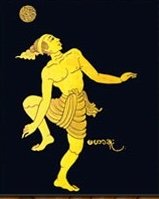
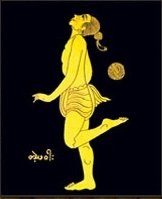
The basic idea is to pass and receive the ball in beautiful ways. Over centuries of play, chinlone players have developed more than 200 different ways of kicking the ball — the same move done with the right and left sides are considered different moves. Many of the moves are similar to those found in Myanmar dance and martial art. Some of the most difficult are done behind the back without seeing the ball. Form is as important as skill — there is a correct way to position the hands, arms, torso, and head during each move, and a move is only considered well done if the form is good.
Two Styles
There are two distinct styles of chinlone played in Myanmar. The circle style described above — known as Wein Kat — is played by both men and women together. The second is a solo performance style known as Tapandaing, performed only by women. In this style, women perform choreographed routines of extraordinary ball control and balance, often making use of apparatus like tight ropes, hoops, fire, and knives in their routines.
There is also a competitive variation of the game organized by the Myanmar Chinlone Federation. In competitive chinlone, teams are judged and scored on technical mastery as well as artistic flair. Only one team plays at a time - there is no head-to-head competition. Points are awarded for precision, rhythm, and executing difficult traditional techniques. Total points are compared to determine the winning team. The Myanmar Chinlone Federation is spreading the competitive game to other countries in the region. Chinlone has been a featured competition in the SEA Games (South East Asia) in 2013, 2017, 2023 and 2025. Myanmar has dominated the competitions.
The Spiritual Dimension
All serious chinlone players experience something beyond ordinary athletic focus. During interviews with the top players in Myanmar, what emerged was a shared experience of altered states — of extraordinary absorption, heightened awareness, tranquility and something close to bliss. The players had a word for this: Jhana — a term from Buddhist meditation referring to a state of profound concentrated absorption. It is the root of the word Zen. These experiences arise naturally from the depth of focus that chinlone demands.
Chinlone has been played for over 1,500 years. Long ago it was performed for Burmese royalty. It belongs to a global family of similar games — related to Takraw in Thailand, Sepak Raga in Malaysia and Indonesia, Sipa in Philippines, Kataw in Laos, Sek Dai in Cambodia and Kemari in Japan. Chinlone is thought by some to share ancient roots with Chinese Cuju, acknowledged by FIFA as the oldest form of football. But nowhere else in the world has this kind of play combined extraordinary athletic skill with artistic expression and a spiritual dimension the way it has in Myanmar.